Trailer
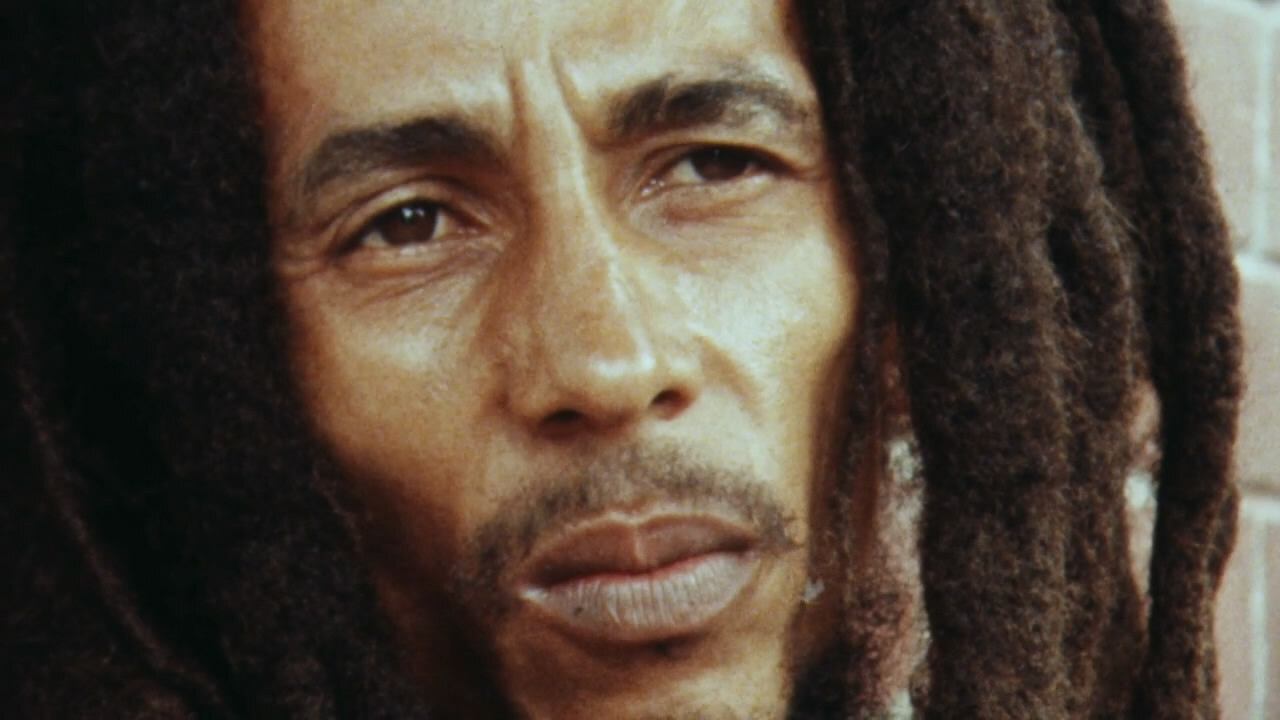
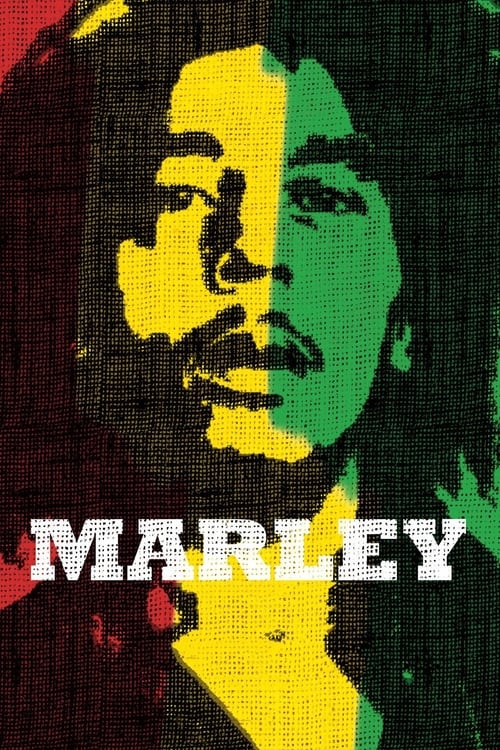
Marley is a 2012 documentary-biographical film directed by Kevin Macdonald documenting the life of Bob Marley.[ 4]
The film initially began development in 2008, with a planned release date for Marley's 65th birthday on 6 February 2010. Martin Scorsese and Jonathan Demme were attached at different points but both would depart from the documentary, with Demme citing creative differences.[ 5] The documentary was then put on hold until Macdonald signed on as director.[ 6] [ 7]
It was released on 20 April 2012, and received critical acclaim.[ 1] [ 2] [ 8] The film was also released on demand on the same day, a "day and date" release.[ 9] The film features archival footage and interviews.
The content spans the life and musical career of Bob Marley, mainly as seen through the eyes of those who knew him and contributed to the documentary, including Bunny Wailer, Rita Marley, Lee "Scratch" Perry and many others.
Although Marley was enthusiastic about music from a very young age, he had disappointing record sales as a solo artist with his first singles, “Judge Not” and “One Cup of Coffee”. He then decided to collaborate with Peter Tosh and Bunny Wailer to create “The Wailers.” This group later became known as “Bob Marley and the Wailers” and achieved international fame. The group made Bob Marley a household name and brought worldwide attention to Jamaican culture, Reggae music and the Rastafari movement.
Throughout the documentary, much of the content deals with Marley's struggle with racial identity and acceptance. Marley's widow, Rita Marley stated “they saw Bob as an outcast, because he didn’t really belong to anyone. You’re in-between. You’re black and white; so you’re not even black.” Livingston also comments that Marley was harassed in school for being mixed race. On his race, Marley stated:
"I don't have prejudice against meself. My father was a white and my mother was black. Them call me half-caste or whatever. Me don't dip on nobody's side. Me don't dip on the black man's side nor the white man's side. Me dip on God's side, the one who create me and cause me to come from black and white."
Marley's journey to become a member of the Rastafari movement is documented in the film starting with his friendship with Rastafari preacher Mortimer Planno. Marley firmly states several times that he is a key part of the Rastafari movement: the belief that the Emperor of Ethiopia, Haile Selassie I, is the reincarnation of Christ. Rita Marley stated that she also converted to Rastafari upon the visit of Selassie I to Jamaica when she saw “marks in his hands”, similar to those Jesus bore when he was nailed to the cross.
Marley's love of Rastafari was brought out in lyrics of songs such as, “Exodus” and “Jah Live”. Marley's inspiration for other songs is addressed in the documentary. Examples of this are “Corner Stone”, which dealt with the rejection of Marley by white relatives on his father's side; “Work”, which dealt with Jamaica's political conflicts; and “Zimbabwe”, which dealt with the Zimbabwean liberation movement.
Throughout Marley's life, he had a total of eleven children with seven women, despite being married from a young age. When asked if he was married, Marley responded:
"No. You see, I can’t deal with the Western ways of life. If I must live by a law, it must be the laws of His Majesty. If it’s not the laws of His Majesty, then I can make my own law."
Marley's most famous relationship was with Cindy Breakspeare (Miss World 1976). From this relationship, Breakspheare had Marley's son, Damian Marley. When asked about how she felt about Marley's relationships with other women, Rita Marley responded:
"I became his guardian angel. By that time, I was past the service of being a wife because of the importance of who I knew Bob is. I didn’t see it as a fun trip. We were on a mission. It was like an evangelist campaign to bring people closer to Jah."
Marley's death is uniquely depicted in the documentary. In 1977, Marley found out that he had a cancerous sore on his right big toe. It is believed that the sore on his toe was the result of a cancer that was already spreading in Marley's body. Contrary to those sources, Rita Marley is quoted in saying:
"Somebody stepped on it with their spiked boots and it started to get infested. But Bob would still play football the next day on it, and the next day."
The documentary also conducts interviews with Rastafari doctors, which shows Marley's strict adherence to the religion. Rastafari doctor, Carleton Fraser, states that “doctors recommended amputation of the hip and removing the entire leg.” Chris Blackwell gives conflicting information and insists that they just needed to amputate Marley's big toe for him to survive. Later, when Marley started losing his hair in the course of chemotherapy treatment for his cancer, family members also state that Marley had much displeasure in cutting off his dreadlocks, an aspect of Rastafarism, which was unfortunately necessitated by the physical pain their heavy weight was causing him.
The film ends with Marley saying a quote that was the overall message in his music:
"I don’t really have any ambition, you know? I only have one thing I’d really like to see happen. I’d like to see mankind living together. Black, White, Chinese, everyone. That’s all."
During the credits, it shows people from many countries singing the performing “Get Up, Stand Up” and “One Love”.
Interviews conducted and featured include: Cedella Marley Booker, Rita Marley, Bunny Livingston, Ziggy Marley, Cindy Breakspeare, Aston Barrett, Constance Marley (half-sister), Peter Marley (second cousin), Chris Blackwell, Peter Tosh, Lee Jaffe, Donald Kinsey, Edward Seaga, Judy Mowatt and Junior Marvin.
The soundtrack to Marley was released four days prior to the film, on 16 April 2012.[ 10] It contains 24 of the 66 tracks listed in the closing credits of the movie. The soundtrack's first single is "High Tide or Low Tide" which was released as a single on August 9, 2011 (2011-08-09 ) .[ 11] The soundtrack's track list is arranged chronologically as it appears on the film.[ 12] It's the first record to feature the recording of Bob Marley performing "Jamming" at the One Love Peace Concert, where Marley joined the hands of Michael Manley and Edward Seaga, members of the People's National Party and the Jamaican Labour Party respectively.[ 12]
The tracks listed in the film's closing credits, in order, are:
As of 4 August 2012, the film has grossed $1,412,124 in North America.[ 3]
On the review aggregator website Rotten Tomatoes, 95% of 111 critics' reviews are positive. The website's consensus reads: "Kevin Macdonald's exhaustive, evenhanded portrait of Bob Marley offers electrifying concert footage and fascinating insights into reggae's greatest star."[ 13] Metacritic, which uses a weighted average, assigned the film a score of 82 out of 100, based on 32 critics, indicating "universal acclaim".[ 14] However, the film did receive criticism, with Bunny Wailer saying that the Rastafari part of Marley's life was underplayed. Furthermore, its opening in Jamaica was soured after the colours of the Ethiopian flag were placed on the ground, causing Wailer and others to boycott the opening.[ 15]
Bewertungen im Detail
Auf anderen Plattformen
Rezension zu Marley
Es gibt ein einfaches Rezept, um als dokumentarischer Filmemacher seine Chancen auf den Gewinn eines Oscars zu erhöhen: drehe eine Musikerbiografie. Dabei zu bedenken gibt es eigentlich nur, dass der/die MusikerIn im amerikanischen oder wenigstens englischsprachigen Raum populär gewesen sein sollte – und dass er oder sie vielleicht schon in jungen Jahren dem
Leben einen Abschiedsgruß geschickt hat. So geschehen bei »Amy« (gewann 2016) oder bei »Searching for Sugarman« (2013); und auch bei »20 Feet from Stardom« ging 2014 der goldene Junge an die Produzenten einer Musikerdoku. Dass der britische Dokumentarfilmer Kevin Macdonald ausgerechnet im Jahr 2000 mit »Ein Tag im September« seinen bis dato größten Erfolg holte, ist bemerkenswert. Denn Macdonald schlug mit seiner Politdoku über die Geiselnahme von München im Jahr 1972 ausgerechnet Wim Wenders, dessen damals für den Oscar prämierter Film »Buena Vista Social Club« für viele Filmfans als einer der besten Musikerdokumentarfilme gilt.
Diese kleine Vorgeschichte sollte erwähnt sein, wenn wir über Kevin Macdonalds 2012 vollendeten Dokumentarfilm »Marley« nachdenken, der seinem Macher zwar keinen Oscar einbrachte, aber immerhin einige namhafte Nominierungen – unter anderem 2013 für einen Grammy und für den BAFTA Award – das britische Gegenstück zum ungleich bekannteren Oscar. Auf 144 epischen Minuten erzählt Macdonald das Leben des jamaikanischen Musikers. Der war zwar kein Heiliger, aber ein Inspirator für Millionen Menschen. Wohl auch für den schottischen Filmemacher, der versuchte, den Rastafari-Heiligen Bob Marley wieder zu dem zu machen, was er war: ein talentierter Musiker namens Robert Nesta Marley, dessen Musik heute als Stimme für Frieden und Gleichberechtigung wahrgenommen wird.
Aber bleiben wir gerecht: »Marley« ist ein mitreißender Dokumentarfilm über einen Musiker und eine bis heute andauernde Bewegung – aber es gibt eine ganze Reihe von ähnlichen Dokumentarfilmen dieser Güte, die man gesehen haben kann. Tom DiCillos »The Doors: When You‘re Strange« beispielsweise, oder auch »Shine A Light« von Martin Scorsese und natürlich die andere große Rolling-Stones-Doku »Gimme Shelter« von Albert Maysles. Und auch Wim Wenders hat mit seinem »Buena Vista Social Club« Maßstäbe gesetzt. Wieso also haben wir »Marley« ausgewählt? Vielleicht weil er der erste Dokumentarfilm ist, der sein Publikum übers Internet erreicht. Bei Facebook ist er mit 5 Millionen Likes führend und – wenn auch nicht legal – in der einen oder anderen Form immer im Web abrufbar. Im Moment der Niederschrift dieser Zeilen gerade bei YouTube mit türkischen Untertiteln.
Rezension zu Marley
Bob Marley (1945-1981) war und ist einer der berühmtesten Musiker des 20. Jahrhunderts. Der Mitbegründer des Reggae führte ein bewegtes Leben und wurde für viele Menschen zu einer Ikone der damaligen Friedensbewegung. Der Regisseur Kevin MacDonald hat in enger Zusammenarbeit mit Marleys Familie einen sehenswerten Dokumentarfilm über Jamaikas Ausnahmekünstler gemacht.
No Woman No Cry, I Shot the Sheriff, Could You Be Loved, Get Up Stand Up ... Dies sind wohl die bekanntesten unter Bob Marley Stücken. Der jamaikanische Musiker hatte einen englischen Vater, über den er allerdings nie viel sprach. Als junger Mann kam Marley nach Amerika, wo er seine Musikerkarriere startete, er kehrte jedoch bald wieder nach Jamaika zurück, um dort zu leben und zu wirken. Der Lebemann hatte zahlreiche Kinder und Liebesaffairen. Man vermutet, dass Bob Marley zwischen zwei und vier dutzend leibliche Kinder hat, dazu noch adoptierte. Offiziell erkannte er zwölf Kinder an.
Die größte Liebe in Marleys Lebens aber war die Musik und die Wirkung, die er damit auf die Menschen haben konnte. Er engagierte sich in der Friedensbewegung und wurde zu seiner Zeit zu einem Vorbild und zu einer wichtigen Identifikationsfigur. Mit Hilfe von Marleys Sohn Ziggy, seiner Witwe Rita und Jimmy Cliff entstand Kevin MacDonalds Dokumentarfilm "Marley", der seinen Weg von den Anfängen seiner Karriere bis zu seiner Zeit als gefeierter internationaler Star nachzeichnet. Es sind Aufnahmen von Auftritten sowie zahlreiche Interviews zu sehen. Da MacDonald als erster Filmemacher uneingeschränkten Zugang zum privaten Video-Archiv der Familie hatte, konnte diesmal bislang nie veröffentlichtes Material verwendet werden. Der Film zeigt auf, welche große Rolle Bob Marley in seiner Generation inne hatte.
"He made his reggae music to uplift us, inform, entertain, inspire, and make change in the world. He's a musician, a poet and songwriter, a philosopher, a soldier, an activist and a leader." Cedella Marley

2012